Sunday, July 18, 2010

In Theatres: Inception


In Theatres: Inception
Directed by Christopher Nolan
The Grade: A

I walked out of the theatre after Inception—2010’s most interesting movie thus far—with five big questions on my mind (none of which were “what the hell just happened?”):

1. Does Leonardo DiCaprio have a dead wife that he’s managed to hide from the paparazzi?

Over the last decade, one thing about Leonardo DiCaprio has become abundantly obvious: he’s not just in it for the money. DiCaprio has starred in exactly 10 movies in the last dozen calendar years, all of which have been prestige projects by Oscar-caliber directors. Despite a huge demand for his talents, DiCaprio doesn’t even make one movie a year, while most of his fellow A-listers more than double that output. So, it probably goes without saying that when the man agrees to make a movie, on at least some level, he must really love and identify with his character. With that thought in mind, consider this: In each of the last two movies DiCaprio has made, (Inception and Martin Scorsese’s Shutter Island, which came out not even five months ago), he’s played a man so consumed with guilt over the death of his wife—for which he may or may not have been responsible—and so tortured over her continued appearances in his dreams, that he retreats into the farthest recesses of his own mind to cope with the memories. I suppose it could be coincidence, but that’s an extremely unique oeuvre for someone to make two consecutive movies in. It makes me want to ask the man “Umm, dude, is there something you’re not telling us?”

2. Does this movie have any antecedent?

The cliché in Hollywood has always been that everything is recycled in one way or another, but consensus seems to be that it’s been getting far worse of late. The past few summers, while still a dumping ground for a hefty amount of franchise trash, have at least given us some genuine classics like Wall-E, Inglorious Basterds, The Dark Knight, The Bourne Ultimatum, and Star Trek. But summer 2010 has not only been bereft of quality (Toy Story 3 has been the only good movie of the season thus far), it’s been downright putrid for originality. It’s one thing to reuse good ideas, but the movies flooding the multiplexes the last several Fridays have seemed to steal bad ideas (and deservedly, most of them have epically failed at the box office). The A-Team, compared to everything else, felt like a good movie simply because it reminded us of the 1980s. If that’s a strategy for quality, we’re in far worse shape than we thought.

And now comes Inception, Christopher Nolan’s latest spelunker of the mind. To say the movie is merely original doesn’t adequately get the point across, because calling something “original” these days might just mean it isn’t a threequel. There is undoubtedly a bit of influence from David Lynch’s Mulholland Dr. (2001), which was the first major movie to allow dream logic to permeate story structure, and Michel Gondry’s Eternal Sunshine of the Spotless Mind (2004), which made a serious attempt to recreate the visual stylings of a person’s subconscious. Nolan does expound a bit on some of the “we’ll introduce the rules as we go along” narrative techniques he first used in Memento (2001), and I suppose it could also be said that the story has echoes of Phillip K. Dick, even though there aren’t any specific similarities. But really, that’s it. While Inception may have a distant uncle or two, it’s totally without parents. And really, how many movies can we say that about?

3. Does Inception have any hope of being considered a success with its alleged 160 million dollar budget?

I worry the simple answer here is “no.” Once you throw in marketing, Inception likely cost upwards of 180 million. On one hand, you could argue the budget is justified because it truly does show up on the screen. The special effects turn the dazzle up to eleven with stunning trickery and jarring visuals—wait until you see Paris turned over on itself—rather than mundane CGI details, and the locations hop from Tokyo to Morocco, then Paris to the Alps (most James Bond movies don’t even cover that much ground). But even though the budget translated directly to quality, I worry that spending that much money on a movie like Inception might have been a poor business decision.

Put simply, Inception has to make substantially over 200 million just to avoid being considered a failure, and it probably has to get within striking distance of 300 million to be deemed a total success. To put that in perspective, only three other movies from 2010 have hit the 300 million mark (Alice in Wonderland, Iron Man 2, and Toy Story 3—all stemming from major properties), while the alleged summer blockbusters Robin Hood, Prince of Persia, The A-Team, and Knight and Day haven’t even made 300 million combined—and those were all supposed to be crowd pleasers. It’s difficult to really call Inception a crowd pleaser because of how much mental heavy lifting it demands from the viewer. Combine that with the fact that Inception isn’t part of a franchise or related in any way to a previously existing property, and it’s difficult to understand how 300 million dollars worth of people will fill the seats. Inception’s marketing team is attempting to sell the movie based on four things: the director/screenwriter of the second most popular film of the last ten years, arguably the best lead actor under forty, a cool concept that has never really been seen before, and previews that give away virtually nothing of the story. Will that be enough? The success or failure of Inception will end up depending on two things—the compulsion many people will feel to see the movie twice, and great word of mouth. Repeat viewers shouldn’t be a problem, but great word of mouth depends on…

4. Will audiences be happy with Inception?

Again, I worry the simple answer is “no.” I have no doubt that sci-fi nerds and cinephiles (like me) will, by and large, love the movie. But what about the couples that go to a movie theatre once or twice a month? Will they like it enough to tell their friends? Or, in the worst possible scenario, will they tell their friends to stay away? Inception is a movie that demands a lot of attention, and doesn’t reward the viewer with easy-to-understand answers or unambiguous conclusions. The climactic half hour of the movie takes place simultaneously on five different planes of consciousness and requires the audience to keep track of the relationships between them. Most people will find the movie’s ending either brilliant or intolerably frustrating, with no in-between. Will viewers appreciate this?

Of course, maybe I’m just being overly cynical. After all, The Dark Knight was the smartest and most complex super-hero movie ever made, and it also made the most money. Sure, virtually every “tentpole” movie released this summer has bombed, but maybe that’s because they mostly sucked. Perhaps a brainy, trippy, well-crafted, innovative movie with astonishing visuals is exactly what audiences have been waiting for. We can only hope, because if Inception doesn’t make its money back, it’s the last 160 million dollar risk on an original concept we’ll be seeing for a looooong time. Savor it.

5. Is Christopher Nolan the best director working right now?

Discounting anyone whose made fewer than five movies (sorry Jason Reitman and Sophia Coppola, your body of work is too small to be in this discussion), and only going on the last 10-15 years of output, Nolan has six main competitors: The Coen Brothers, Clint Eastwood, David Fincher, Martin Scorsese, Steven Soderbergh, and Quentin Tarantino. Soderbergh, for all of his virtues and risk-taking, has the worst quality batting average of the bunch, so he’s out. The Coens might be the best when they’re on their A-game, but they also released two shockingly bad movies in the past decade (The Ladykillers and Intolerable Cruelty), so it’s difficult to place them at the top. Eastwood and Scorsese have remained unusually vital and prolific well into retirement age, releasing some truly great movies over the last seven or eight years, but Eastwood has also made a few too many average films (Invictus, Changeling, and Flags of Our Fathers), while Scorsese’s résumé is a bit too hampered by our knowledge that his prime was three decades ago. I think Fincher is great, but I remain in a small minority of people who completely loved The Curious Case of Benjamin Button, while barely anybody even saw Zodiac (and for shame—it was fantastic). I’m also keenly aware that I enjoy Quentin Tarantino’s eccentricities and stylistic arrogance—the same qualities that turn many people off his work—perhaps a little too much.

Christopher Nolan, though, doesn’t really have any red flags; he’s made seven movies in twelve years, three of which are masterpieces (Memento, The Dark Knight, and, yes, Inception), and none that rate worse than a “B.” His first movie, 1998’s Following, remains an undiscovered gem; Memento has been cited as one of the most influential of the 2000s; Batman Begins started the current fad of franchise reboots; and The Dark Knight might be the greatest ever of its genre (the super-hero flick). Nolan’s movies have achieved the rare Spielbergian quality of entertaining the masses without sacrificing substance and brains. Nolan would also make one hell of an auteur theory subject, as all of his films have, at their core, been about obsessions that run so deeply they threaten sanity and rationality. Christopher Nolan, until further notice, and with no real power vested in me, I hereby anoint you unofficial Alpha-Dog of the directing community—now please just don’t screw up Batman 3.


Friday, June 18, 2010

The Great Scenes: Five Easy Pieces


Note: This is a recurring feature on some of the greatest individual scenes in movie history. Please be aware that the posts in this series will often reveal major plot elements, and maybe even surprise endings, of the movie in discussion, so proceed with caution if you haven't seen the movie before.


Five Easy Pieces (1970) – Directed by Bob Rafelson


“Half a Conversation” (scene 27 on the DVD)


Five Easy Pieces is probably most often remembered as being Jack Nicholson’s first starring role in a major Hollywood movie (as well as being his first Oscar nomination as a lead actor), and honestly, it’s really the movie that gave us the “Jack” persona that we all think of (a little rebellious, doesn’t like the rules, has some swagger but also some cockiness, and maybe a bit of crazy). Sure, he refined his signature style in The Last Detail (1973), and then perfected it in One Flew Over the Cuckoo’s Nest (1975), but this is absolutely where it first manifested. It’s also possible modern audiences will have some sort of vague recognition of the infamous diner scene, without necessarily having any idea what they know it from. But for some reason, the movie isn’t remembered for being what it is: a classic. It never turns up on lists of “movies you must see before you die,” and didn’t make the cut on either version of the American Film Institute’s Top 100 American Films.

The first half of the movie introduces us to Robert Eroika Dupea (Nicholson), a California oil worker who seems to live a pretty typical blue-collar American life, though perhaps a bit of an unhappy one. Robert clearly doesn’t much care for his attractive but fairly vacuous girlfriend, Rayette, who works as a waitress and spends all her free time singing to him. He also doesn’t seem to really like his job or his best friend, and he finds empty sex with a girl he meets at a bowling alley. Robert seems to feel like he doesn’t belong in his own life, but we don’t know why. He finds out from a friend that Rayette is pregnant, and he finds out from his sister that their father has had a stroke and is in dire health. This prompts a road trip back home to the Pacific northwest, with Robert reluctantly taking Rayette along because he didn’t know how to leave her. Robert’s arrival at his family’s home commences the second half of the movie, as well as the revelation of what he ran away from.

It turns out Robert Eroika Dupea (his middle name comes from Beethoven) is a piano prodigy who comes from a long line of classically trained concert pianists, a profession that his father, sister, and brother all share. It’s never explicitly explained why he ran away from both his family and his talent, but it’s plainly visible that he doesn’t feel comfortable in their lifestyle. He falls in love with his brother’s beautiful student and sleeps with her, and then finds out she’s actually his brother’s fiancée. When he tries to convince her to choose him, she asks him “if a person has no love for himself, no respect for himself, no love of his friends, family, work, something—how can he ask for love in return?” This prompts Robert to finally speak honestly with his father, who is unable to respond due to the stroke, but can understand all too well.


In an acting career decorated with numerous accolades and iconic roles, I really believe this is Nicholson’s finest moment. The heartbreaking honesty with which he admits “things go bad” whenever he stays in a place too long, and the way the tears come not by what’s said, but by what he’s unable to say. Considering the almost zany over-confidence that defines so many of his best characters, it’s rather disarming to see Nicholson break down and show so much painful vulnerability. Because this was one of Nicholson’s first major roles, audiences at the time had the luxury of simply viewing the character, and not really seeing “Jack Nicholson: Mega Star.”

If The Graduate (1967) was the first major movie to prominently make a point of showcasing the ennui that an entire generation was experiencing, Five Easy Pieces was surely the movie that turned the “ennui and disaffection laced character piece” into an entire sub-genre of filmmaking. (And where would the careers of Sophia Coppola and Noah Baumbach be without such a genre? Lost in Translation is definitely the feminist grandchild of Five Easy Pieces.) Moviegoers in 1970 had never before seen a character like Robert Dupea, someone who refused to accept the life he was meant to lead, and who clearly wanted to get away from a lot without necessarily going toward anything. The movie also came along at a time when Hollywood was suddenly on the cusp of a new wave that valued truth in character over an audience’s theorized desire to see a happy ending. After spending the movie’s first half looking at the life Robert ran to, and the second half seeing the life he ran away from, the movie ends with Robert running yet again, in a final shot of haunting longevity.


Saturday, June 12, 2010

The Great Scenes: Star Wars

Note: This is the first post in what will be a recurring feature on some of the greatest individual scenes in movie history. Please be aware that the posts in this series will often reveal major plot elements, and maybe even surprise endings, of the movie in discussion, so proceed with caution if you haven't seen the movie before.

Star Wars (1977) - Directed by George Lucas

"Binary Sunset" (Scene 11 on the DVD)

Remember when George Lucas could make a good movie? No, I don’t either, because I actually wasn’t alive for it. But while everyone seems to agree that Lucas used to be a great director, and now he no longer is, not many people seem capable of pinpointing why. What did American Graffiti (1973) and Star Wars (1977) have that the “new trilogy” doesn’t (besides that elusive thing I like to call “quality”)? The scene above goes a long way towards explaining the issue. Watch it again—it’s 36 seconds long, and absolutely nothing happens, but it completely illustrates why Star Wars captured the collective imagination of an entire generation and remains one of cinema’s greatest achievements of entertainment.

“Binary sunset” is pretty close towards the beginning of the film, and all that has really happened so far is that Luke Skywalker, a teenager living in his uncle’s farming community, has just purchased two droids (helper/slave robots) that appear to have previously fought in a major rebellion in other parts of the galaxy. The notion of finding out about this rebellion greatly excites Luke, as farming is all he has ever known, but his prospects for a different life seem quite low. A dejected Luke, who has just found out his uncle expects him to stay on the farm for at least another year, walks outside to look at the beautiful sunset provided by the twin suns of his home planet, Tatooine. Anyone that has seen Star Wars knows Luke’s life changes forever the next morning; he meets Obi-Wan Kenobi, finds out his father was a great Jedi Knight who fought and died in the rebellion, finds his aunt and uncle murdered by the empire, and goes off to help rescue a princess held hostage on a space ship that destroys planets.

A lesser storyteller wouldn’t have placed a transition moment between Luke’s two realities—we simply would have seen Luke Skywalker: galactic redneck one day, and then Luke Skywalker: savior of the universe the next. That’s certainly the Michael Bay way of doing things. But once upon a time, when George Lucas understood the vocabulary of great cinema, he gifted us with a perfect 36 seconds of nothing and everything.

I say nothing because, as mentioned earlier, nothing actually happens in the scene; I say everything because, as corny as it sounds, this is the moment where Luke recognizes his destiny of greatness, as well as the moment where the audience invests in the mythology of the Star Wars universe. One of the best things Lucas did with the original Star Wars was beginning in the middle. He transported us immediately into an epic that had been going on for a long time without us, and then slowly, methodically, filled us in on key important elements of the story. In the movie, Luke represents the audience, as we learn and experience with him the reality and scope of the rebel alliance against the empire. And for both Luke and us, “binary sunset” is the moment where we collectively understand “hey, I think there’s something bigger going on here.”

In all of the great hero sagas and myths, there’s typically a moment where the hero, while not necessarily becoming the hero yet, at least takes the first step towards recognizing that they have a greater calling. For Luke, this is that moment; when he gazes out at those twin suns, with his wispy hair at the apex of 1970s cheesiness, we can see that he recognizes he’s just not meant to be a farm boy. Something inside of him clicks, and we implicitly understand that longing for a life of greatness.

Of course, the John Williams score is of incalculable importance to the scene. People often ask me why I so adamantly prefer film over prose, and this is one of the scenes that I always think of. Could it exist in prose? Sure. Could it work? Absolutely not. No matter how impressive their word prowess, no author could adequately create the “goosebump” effect achieved by the combination of John Williams’ “Force Score” crescendoing in unison with Luke looking down, doubting himself, and then having the inner strength to look back up and metaphorically seize his destiny.

So seriously, how is it possible that the man who gave us those 36 seconds of cinematic nirvana can, 20+ year later, churn out the flaming soufflé of nerd posturing and CGI diarrhea that is the new trilogy? I truly have no idea. The old cliché about success is that it makes us turn our best habits into our worst habits, by overindulging in them while ignoring everything else. I suppose that’s essentially what happened to Lucas; he assumed that the special effects and technological advancements of the original trilogy were far more responsible for its popularity than apparently minor things like character and fun. But even though Lucas has clearly forgotten what makes a good sci-fi adventure movie, the lessons he taught us have not been lost. Check out the trailer for J.J. Abrams’ excellent Star Trek reboot from last summer, particularly starting at about the 55 second mark. Long before he was Captain of the Starship Enterprise, all James Kirk really needed in order to recognize his true calling was to gaze into a binary sunset of his own.


Tuesday, June 8, 2010

Best of the 2000s: City of God (2003)


Note: This is the first in what will be a frequently continuing series of posts over the next year that spotlight the best movies of the 00s, albeit in a completely random order.


First up: City of God (2003) – Directed by Fernando Meirelles


Decades from now, when the dust kicked up during the early part of the 21st century has settled, I expect film historians and enthusiasts will argue that City of God might have been the best movie of the decade. Really, it has everything you could want from a movie: It seamlessly straddles being entertaining and deep, artful and accessible, bombastic and intimate. And it may well be remembered as the movie that finally took the styles innovated by Quentin Tarantino, Guy Ritchie, and Danny Boyle and employed them to tell a truly meaningful story about the world we live in (much as I passionately love them, Pulp Fiction, Trainspotting, and Lock, Stock, and Two Smoking Barrels don’t exactly change the way people view the world).

In a scant 130 minutes, first time feature director Fernando Meirelles manages to weave two decades worth of crime in one of the world’s largest cities into a cohesive story about the heartbreaking cycle of violence the children living in Rio de Janeiro’s slums find themselves born into. Centering around Rocket, the younger brother of one of the slum’s original rebels without a cause, we follow his journey as he watches various crime lords rise and fall, all the while continuously trying to pull out of the scene he keeps finding himself tumbling back into.

While you can view the trailer here, you’re better off just checking out the first five minutes of the movie. Very few movies are able to flawlessly draw the audience into a totally foreign world in the span of an opening credit sequence, but City of God is one of those movies. The editing pulsates at the pace of a latin drum beat, while the colors teem with as much life as the rain forest. And we even get a great acting performance out of a chicken. (Sadly, Youtube doesn’t seem to have a subtitled version of this clip; while the style is far more important than the dialogue, know that when you rent the movie, you’ll understand what is being said.)


I’ve always believed in the ability of great films to inform who we are and how we think about things, and City of God is a perfect example. So many of us living in the silver spoon of American life don’t have any conception of true poverty, the kind in which the best prospects for getting out is to live fast and die young. Many characters in City of God aren’t killed as much they are swallowed whole by a way of life they had no power to choose against. Countless TV critics have praised the fourth season of The Wire (and rightfully so) for its expert chronicle of the way young kids find themselves involved in the drug trade; City of God deals with the same issues, except in a world where a way out simply does not exist.

It’s fascinating to watch the movie in hindsight, because it seems like a more realistic and interesting version of Slumdog Millionaire, which, after all, won Best Picture. When Slumdog came out, I called it a live action version of a Disney fairytale. Now, I just think it’s the Disney version of City of God. So for anyone that enjoyed Slumdog, do yourself a favor and check out the caffeinated version.

Thursday, March 11, 2010

Oscar Thoughts and Reactions

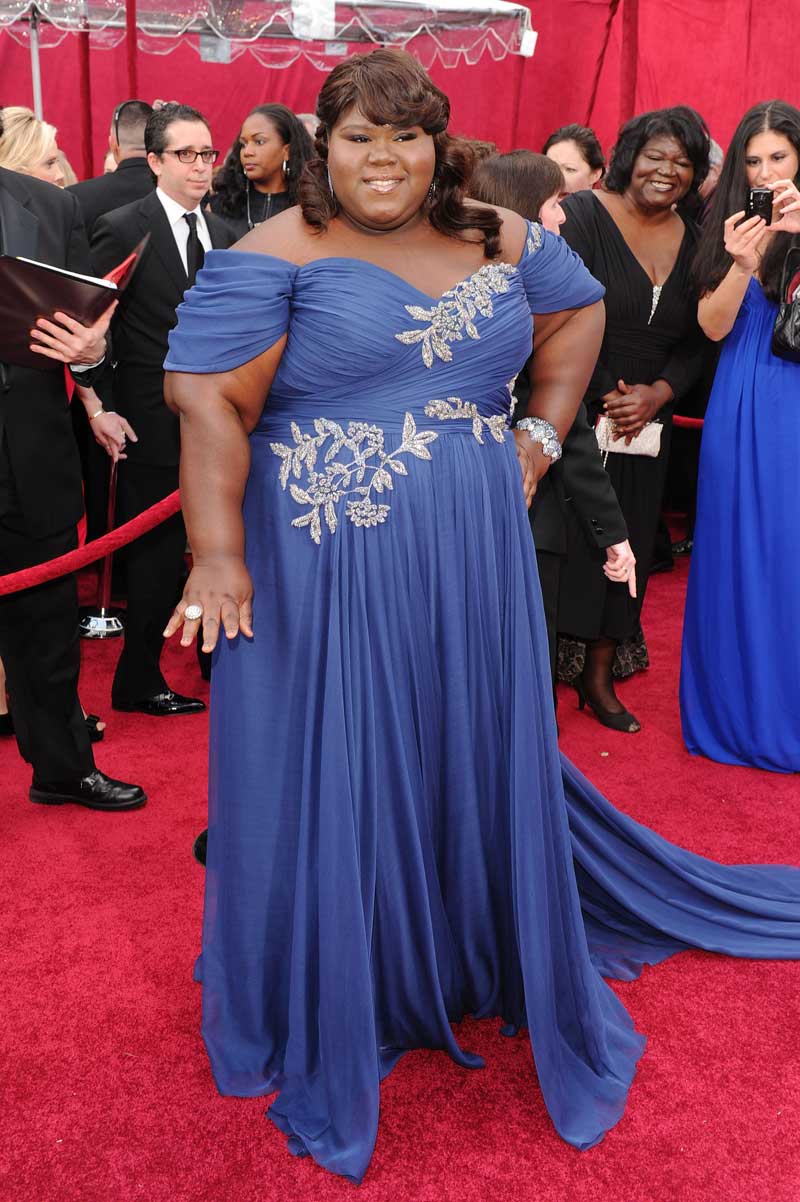
-The two best moments from before the ceremony both came courtesy of the Precious cast, but they were great moments for totally opposite reasons. The “good” great moment was from Precious herself, Gabourey Sidibe, who was bubbly, engaging, and clearly having a great time. When asked about her dress (which she looked great in: http://images.huffingtonpost.com/2010-03-08-97515860.jpg), she said “if fashion was porn, this dress would be the money shot.” That was obviously going to be the best quote of the night and the night hadn’t even started yet. The “bad” great moment came during the Barbara Walters Special, while she was interviewing Mo’Nique. When Walters asked her interviewee why she doesn’t shave her legs, Mo’Nique inexplicably hiked up her dress to show off the untamed jungles that she calls her shins. Walters literally looked like she was watching someone get stabbed to death; check it out at the 25-second mark of this clip: http://www.youtube.com/watch?v=29szcAV8KFo&feature=related

-Between the stage setup and Neil Patrick Harris’ opening song and dance number, it seemed that this year’s producer (Adam Shankman—director of Hairspray) was going for a return to the 1930’s “backstage musical” style of showbiz. Speaking of the great NPH, he was clearly auditioning for next year’s hosting gig, right? I’m good with that as long as he leaves the sparkled tux at home.

-The blogosphere seemed pretty lukewarm on the Steve Martin/Alec Baldwin hosting duo, but I thought they did a good job. They’re no Billy Crystal, but I’d give them a solid B+. I thought they benefited from being able to banter with each other. They’re best moment: telling Christoph Waltz that he had hit the Jew-hunting “motherload” by being in the Oscar audience.

-I thought it was fascinating that in a few cases, the actors who presented the Best Picture nominees had starred in movies that directly competed for a nomination with them (and lost). For example, Chris Pine, star of Star Trek, presented the clip of District 9, the movie that likely killed Trek’s chance at a nomination. Colin Firth presented the clip of An Education, which likely stole many votes from his own A Single Man, and Jeff Bridges introduced A Serious Man, which might have received its nomination at the expense of Bridges’ Crazy Heart. It could have been pure coincidence, but an interesting one at the very least.

-Tina Fey and Robert Downey, Jr. were probably the best presenting duo of the night. It’s just too bad Fey’s dress came from the costume department of Tarzan. http://www.americansuperstarmag.com/sites/default/files/images/tina-fey-030710.preview.jpg

-It’s sad that The Hurt Locker (a movie whose greatness came largely from its suspense, direction, and editing) and Precious (a movie that made its most direct impacts with acting and subject matter) won the two screenplay awards over Inglorious Basterds and Up in the Air, which were both built around some of the best dialogue of the year. I don’t mean to insinuate that the screenplays for The Hurt Locker and Precious were worthless, just that they were less impressive than the movies they beat.

-The John Hughes tribute was fantastic. It managed to do two things: remind you how memorable his movies were, and illustrate how many great actors got their start in his movies (and how many bad actors- yikes!).

-At every Oscar ceremony, there are inevitably a few categories that nobody cares about because they don’t understand them: the awards for animated, documentary, and live action short, and the awards for sound mixing and editing. This year’s ceremony created short videos explaining the importance of those categories prior to announcing their winners, which was very informative and helpful. And getting Morgan Freeman to narrate one of those short videos? Come on… now you’re just spoiling us!

-I saw Ben Stiller’s Avatar riff show up on lists for best moments of the show and worst moments of the show, so people definitely felt pretty strongly about it. I enjoyed it. Anything that makes James Cameron look uncomfortable is a plus.

-Is Best Make-Up a completely dead category? Typically, the nominees in this category created either impressive creature/horror effects (now done predominantly with CGI), or impressive aging/de-aging of actors (also now done predominantly with CGI). If you have to nominate The Young Victoria just to get to three nominees, it might be time to get rid of the category.

-I have mixed feelings on the moving of the honorary awards to a different night. On the one hand, it allows a lot more time and energy to be spent on those awards. More honor, if you will. But on the other hand, it robbed Roger Corman, creator of Attack of the Crab Monsters and Women in Cages, of his chance to give a speech at the Oscars.

-Mo’Nique’s decision to thank the Academy “for proving that it can be about the performance, not the politics” was by far the ballsiest acceptance speech quote of the night, but one that is totally justified. Too often, acting Oscars seem to be decided by a collective feeling of who should own an Oscar, rather than the nominated performance. This year, less so.

-On a night when people with no discernable acting talent like Taylor Lautner and Miley Cyrus were allowed to present at the Oscars, it was refreshing to see a real actress like Sigourney Weaver present Best Art Direction.

-Even though it was clearly only there to pander to ratings, the horror movie montage was nice. A genre unfairly ignored 98% of the time finally got its Oscar moment, and, as with the John Hughes tribute, it reminded us how many great actors have worked in the genre.

-Did the sound guy for The Hurt Locker steal Tom Cruise’s wig from Interview with the Vampire?

-Elizabeth Banks—definitely the best dress of the night: http://www.americansuperstarmag.com/sites/default/files/images/elizabeth-banks-030710.preview.jpg Yowsers!

-The decision to have an interpretive dance troupe perform the Best Original Score nominees was useful but poorly executed. On one hand, it was nice to hear the scores prior to the award so the audience has an immediate opinion on who should win. On the other hand, the dances, though impressive, were too long and way too bizarre. Let’s see a bit of fine-tuning on this segment for next year.

-When Star Trek won Best Make-Up, a snippet of its score was played, reminding me how good it was. Why wasn’t it nominated? Interestingly, the Star Trek score was by the same guy that won Best Score for Up—Michael Giacchino. Not a bad year. http://www.youtube.com/watch?v=W2IEesF4GvY&feature=related

-I enjoyed last year’s advent of having five past winners talk about the acting nominees, but it led to a few non-sequiters (why was Goldie Hawn talking about Taraji P. Henson?). This year kept that great idea but improved on it; instead of past winners, we had people with very personal connections to the nominees. It allowed Tim Robbins to honor his Shawshank Redemption co-star.

-The greatest “life imitates art” moment of the night was the revelation that Jeff Bridges was not only The Dude in The Big Lebowski, but he apparently is in real life as well, man. It’s too bad he didn’t come to The Oscars in a bathrobe and pajama pants.

-Have standing ovations jumped the shark? I counted at least four—for Mo’Nique, Jeff Bridges, Sandra Bullock, and Kathryn Bigelow. I’m good with the ovation for Bridges, a beloved actor from a beloved Hollywood family who’s had a great career and earned his first nomination a whopping 38 years ago. I’m also okay with the ovation for Bigelow, who became the first woman to ever win an Oscar for directing. But Mo’Nique and Sandra Bullock? Really? Standing ovations? Mo’Nique’s performance was phenomenal, but it’s really the only impressive thing she’s ever done. And I don’t care that Bullock’s been acting for twenty years… what’s her best movie? Seriously, what’s her best movie? Speed? Remember, a long career and a great career are not the same thing. Audiences at awards shows should be allowed only one standing ovation per night, except in very rare circumstances, when a second one can be permitted. This year Bridges should have gotten the one allotted ovation, and Bigelow received the “rare circumstance” ovation. For the record, here’s the complete list of current actors and directors that I would accept a standing ovation for, given their careers up to this point: Johnny Depp, Leonardo DiCaprio, Quentin Tarantino, Bill Murray, Michael Mann, Ridley Scott, Julianne Moore, Meryl Streep (for when she eventually wins her third Oscar), George Clooney (for when he eventually becomes the only person to own Oscars for acting and directing) and whoever becomes the first African-American to win an Oscar for directing. That’s it. If you just throw them at anyone, they lose all meaning.

-I went 16/24 on my predictions. I missed one award (documentary short) because I knew nothing about the nominees and just guessed. I missed two awards where I predicted upsets that didn’t happen (original screenplay and lead actress), and I missed five awards that were genuine surprises that went against almost every prediction (adapted screenplay, cinematography, foreign film, sound editing, and sound mixing). Not bad, but not as well as i expected.

Saturday, March 6, 2010

Oscar Preview and Predictions

Best Picture

An Education

Avatar

The Blind Side

District 9

The Hurt Locker

Inglorious Basterds

Precious

A Serious Man

Up

Up In The Air

Who Will Win? Put simply, I don’t know. Not only is this the first time in years that nobody has any idea what movie will walk away with the Best Picture Oscar, but the stakes and symbolism in the race are fascinating. Most everyone knows that the race is basically down to The Hurt Locker vs. Avatar, but that means it’s also effectively a race of art vs. commerce, the most expensive movie ever made vs. an indie film made on the cheap, a critical darling vs. a massive financial juggernaut, the way movies were made in the good old days vs. the way they’re about to be made, and, of course, James Cameron vs. Kathryn Bigelow, who, by the way, used to be married to each other. The fact that both movies were fantastic doesn’t make it any easier to try and predict, but I have a feeling The Hurt Locker will come out on top. However, there is an outside chance of an upset. Since going to ten nominees this year, voters no longer just pick one movie to vote for. Instead, the movies are ranked from 1-10, so if any movie manages to pick up an inordinate amount of second and third place votes, it could make a big difference.

Who Should Win? I picked The Hurt Locker as the year’s best, so I think it’s the one that deserves to walk away as the winner. But if Avatar wins, it won’t be a huge disappointment. Both movies will stand the test of time, and either one would be a well-regarded winner.

Who Got Screwed? Of the ten Best Picture nominees, eight of them also made my own top ten, so The Academy really did a pretty good job. While A Serious Man was #16 on my list, it was still a good movie made by some of the best filmmakers of the last few decades, so I really can’t moan too much about it’s inclusion. The Blind Side is the one that’s troubling. Every critic I like panned this movie to the extent that I couldn’t even justify spending the money on it, so I stayed away. But when critics are calling it things like “a Hallmark Card disguised as a movie,” and talking about how its message is abhorrent when juxtaposed with the message of Precious, I’m gonna guess it didn’t deserve a Best Picture nomination. If there were justice in the world, that slot would have gone to either (500) Days of Summer or A Single Man, two great and original movies by first time directors that I suspect we’ll be hearing a lot more from. But in nominating The Blind Side, the Academy achieved the goal it had in mind when it expanded the Best Picture race from five movies to ten—if major box office hits get nominated, the public has a much greater interest in watching the Oscars. For the first time ever, five Best Picture nominees surpassed 100 million at the box office (Avatar, Inglorious Basterds, Up, District 9, and The Blind Side).

Best Director

Kathryn Bigelow – The Hurt Locker

James Cameron – Avatar

Lee Daniels – Precious

Jason Reitman – Up In The Air

Quentin Tarantino – Inglorious Basterds

Who Will Win? In keeping with the number of ways the Avatar vs. Hurt Locker debate continues to fascinate, consider this: James Cameron, a past winner, is up against Kathryn Bigelow, who could become the first woman to ever take home a directing Oscar. Even if Avatar pulls out a Best Picture win, I suspect Bigelow will win this category no matter what. I just don’t think the Academy will pass on the chance at a first ever female victor, especially one so deserving.

Who Should Win? Bigelow; in a movie with not much dialogue, very little score, and infrequent action, it was her talent behind the camera that made everything so perfect.

Who Got Screwed? Well, the five directors nominated were responsible for what I picked as the five best movies of the year. So it’s hard to say anyone was undeserving of their nomination. That being said, I would have liked Lee Daniels’ spot to have gone to either Marc Webb for (500) Days of Summer or Tom Ford for A Single Man. While I picked Precious as the overall better film, the acting is what made it so great. I feel like Webb and Ford were more directly responsible for the quality of their films than Daniels was for his.

Best Actor

Jeff Bridges – Crazy Heart

George Clooney – Up In The Air

Colin Firth – A Single Man

Morgan Freeman – Invictus

Jeremy Renner – The Hurt Locker

Who Will Win? Jeff Bridges has it in the bag.

Who Should Win? Oscars for lead acting often come down to the same debate: do you reward only the nominated performance, or do you consider the career as well? It’s really a tough call, because I think Colin Firth gave the year’s best lead acting performance, but can I really say he should have an Oscar over Jeff Bridges? No, I can’t. Honestly, all five of these performances were strong enough to be conceivable winners, but being of sound mind and body, how could anyone root against The Dude?

Who Got Screwed? Actually, no one. I really think the five most deserving performances received nominations. Sharlto Copley has the most right to wish there were six nominees, as his work in District 9 was outstanding, while Daniel Day Lewis (Nine), Sam Rockwell (Moon), and Viggo Mortensen (The Road) all turned in their usual great work, but none quite deserved to break into the top five.

Best Actress

Sandra Bullock – The Blind Side

Helen Mirren – The Last Station

Carey Mulligan – An Education

Gabourey Sidibe – Precious

Meryl Streep – Julie & Julia

Who Will Win? The race seems to be either a third Oscar for Streep (who last won for 1982’s Sophie’s Choice) or a first Oscar for Bullock, who’s never been nominated before. All of the talking heads on the Internet seem to think Bullock will pull it out because she won the SAG award, but I don’t place any credence in that. Remember, Britney Spears, Lindsey Lohan, Paris Hilton, and Pamela Anderson all have SAG cards and can vote for the awards. For all we know, the four of them have a party every year where they get drunk, do a few lines of blow, and then fill out their SAG ballots. Fact #1: Meryl Streep has been nominated for sixteen acting Oscars, far more than anyone else, male or female. Fact #2: Streep is currently riding a 27-year/11-nomination losing streak. Sooner or later, she’s getting a third Oscar, and I think it’s going to be sooner. Like, Sunday night sooner.

Who Should Win? As previously stated, I haven’t seen The Blind Side, but I’ve always thought Bullock was a shitty actress, so I don’t suspect she deserves an Oscar all of the sudden just because she dyed her hair and played a rich WASP instead of someone’s ditzy love interest. And honestly, I don’t think Streep deserves to win either (unless we’re rewarding her career more than her performance); Julie & Julia was a perfectly fine movie, but I thought Streep’s acting was a bit too much of a straight up impersonation, without any real feeling of her own. The other three nominees, though, were all great. It’s a tough call who’s most deserving because Sidibe was so vulnerable in Precious and Mirren, always great, perfectly straddled being loving and caring with being plotting and hysterical as Leo Tolstoy’s wife, the Countess Sofya, in The Last Station. But my vote would go to Carey Mulligan for her star turn in An Education. For the audience to feel involved in her dilemma, we have to buy into her intelligence as a woman, while simultaneously understanding her naiveté as a girl. It’s a hard combo to pull off, but Mulligan did it perfectly.

Who Got Screwed? Emily Blunt was wonderful as the titular character in The Young Victoria, and probably should have received the nomination that went to Bullock. And while I don’t necessarily think she should have been nominated, was I the only person who thought Amy Adams was just as good as Streep in Julie & Julia?

Best Supporting Actor

Matt Damon – Invictus

Woody Harrelson – The Messenger

Christopher Plummer – The Last Station

Stanley Tucci – The Lovely Bones

Christopher Waltz – Inglorious Basterds

Who Will Win? Anyone not named Christopher Waltz is just happy to be at the ceremony. And with Waltz’s victory, that will make three straight years that this award has gone to one of the greatest movie villains in memory. Javier Bardem won two years ago for his terrifying Anton Chigurgh in No Country For Old Men, while the late Heath Ledger posthumously earned the award last year for his psychotic Joker.

Who Should Win? Waltz. The quadri-lingual Hans Landa is a fine addition to the recent trend of this Award going to the year’s best villain. However, The Messenger never came to Indianapolis, so I haven’t seen Harrelson’s performance, which some people believe may have a shot at pulling off an upset.

Who Got Screwed? It seems that every year, this is the most difficult category to whittle down to five names. Anthony Mackie (The Hurt Locker), Alfred Molina (An Education), and Jim Broadbent (The Young Victoria) were all in contention, and I didn’t even see Christian McKay’s well-regarded turn as the title character in Me & Orson Welles. But I can really only be upset about one performance not making the final cut: Brad Pitt, as Lt. Aldo Raine, leader of the Basterds, stole every scene, and indeed, every line, that he was given. No good actor gets less respect for his talents than Pitt, who has worked hard to rank among the best of his generation.

Best Supporting Actress

Penelope Cruz – Nine

Vera Farmiga – Up In The Air

Maggie Gyllenhaal – Crazy Heart

Anna Kendrick – Up In The Air

Mo’Nique – Precious

Who Will Win? If Mo’Nique walks away empty handed, it would be the biggest shock of the night.

Who Should Win? Much as I loved Anna Kendrick as Up in the Air’s neurotic Natalie, and think that she could have won in most other years, nobody compares to Mo’Nique, whose performance is like watching molten lava erupt out of a volcano.

Who Got Screwed? I love me some Penelope Cruz, and I couldn’t take my eyes off her in Nine, but the ogling was less because of her performance, and more because her costume design looked like it came from Frederick’s of Hollywood’s spring catalogue. There was nothing wrong with her acting, but the sex appeal was what stood out, and, last I checked, Oscar nominations weren’t supposed to be doled out for sex appeal. I would have given her slot to Melanie Laurent’s performance as Shosanna, the revenge seeking French Jew who watched her family get slaughtered in Inglorious Basterds (the scene where she has strudel and a glass of milk with Col. Landa at the French café was absolutely terrifying). I also felt like Maggie Gyllenhaal, though good, was slightly less deserving than Julianne Moore (A Single Man), or, much as it pains me to admit it, Mariah Carey’s turn as a Jewish social worker in Precious.

Best Original Screenplay

The Hurt Locker – Mark Boal

Inglorious Basterds – Quentin Tarantino

The Messenger – Alessandro Camon & Oren Moverman

A Serious Man – Joel & Ethan Coen

Up – Pete Docter, Bob Peterson, & Tom McCarthy

Who Will Win? It’s firmly between Boal and Tarantino, but I just can’t imagine Tarantino losing this award. Boal did a fine job, but the Hurt Locker simply isn’t a movie where the dialogue stands out.

Who Should Win? Inglorious Basterds, on the other hand, is exactly the kind of movie where the dialogue stands out. Tarantino should be walking away with his second screenplay Oscar (Pulp Fiction was the first).

Who Got Screwed? It’s unfathomable to me that (500) Days of Summer wasn’t nominated. It was more deserving than anything other than Basterds, so take your pick what it should have knocked out—I would say A Serious Man.

Best Adapted Screenplay

An Education – Nick Hornby

District 9 – Neill Blomkamp & Terri Tatchell

In The Loop – Jesse Armstrong, Simon Blackwell, Armando Iannucci, & Tony

Roche

Precious – Geoffrey Fletcher

Up In The Air – Jason Reitman & Sheldon Turner

Who Will Win? Up in the Air has won this category at every single awards ceremony this season, so don’t expect the Oscars to be any different.

Who Should Win? Air is probably most deserving, but it’s a shame that means Nick Hornby’s great treatment of An Education will go home empty handed. Its dialogue exchanges about the purpose and struggle for a great education were remarkably well handled.

Who Got Screwed? This is probably the right five, although A Single Man and Crazy Heart could have easily been included as well.

Best Animated Feature

Coraline

Fantastic Mr. Fox

The Princess And The Frog

The Secret Of Kells

Up

Of course Up is still the shoo-in, but it’s refreshing to see a Pixar film finally compete against some decent competition. Pixar’s dominance, though, is staggering. I recently saw a funny “fake poster” for Up in which the tagline read “Suck it Dreamworks! This shit comes to us in our sleep!” Sad but true: Pixar just makes it look too easy.

Best Foreign Language Film

Ajami

The Milk Of Sorrow

Un Prophete

El Secreto De Sus Ojos

The White Ribbon

Sadly the only one of these that has found it’s way to Indianapolis so far is The White Ribbon, which was masterful, but also a bit trying to get through. Its French director, Michael Haneke, is surely this era’s Michelangelo Antonioni, a filmmaker who thrives on the systematic alienation of his viewers. Even though Ribbon was the big winner at last year’s Cannes Film Festival, I don’t suspect Oscar voters will think so highly of it. Instead, I expect the French prison drama Un Prophete to walk away the winner. Having garnered extraordinary early reviews, I’m looking forward to it’s opening here in a few weeks.

Best Documentary

Burma VJ

The Cove

Food, Inc.

The Most Dangerous Man In America: Daniel Ellsberg And The Pentagon

Papers

Which Way Home

I’m embarrassed to say I haven’t seen any of these, but I can tell you the winner will be either The Cove or Food, Inc. I suppose it just depends on what moves people more: being afraid of what they’re eating, or the slaughter of dolphins. Bet on the dolphins, and The Cove.

Best Art Direction

Avatar

The Imaginarium Of Dr. Parnassus

Nine

Sherlock Holmes

The Young Victoria

In most of the technical categories, I’m expecting an Avatar sweep, and art direction is no different. The deserved winner, though, is probably Imaginarium. Directed by Terry Gilliam (Brazil, 12 Monkeys, Monty Python), the movie was only average, but the visuals were extraordinary. Plus, Tom Waits played the devil.

Best Cinematography

Avatar

Harry Potter And The Half-Blood Prince

The Hurt Locker

Inglorious Basterds

The White Ribbon

I’m so irate that A Single Man was snubbed that I can’t even rationally think about this category. I suppose The Hurt Locker will and probably should win, but I just can’t get myself enthused about a cinematography race in which one of the most beautifully filmed movies of the decade won’t be in competition. Just look at these images: http://www.youtube.com/watch?v=aypyJtHzC70

Best Costume Design

Bright Star

Coco Before Chanel

The Imaginarium Of Dr. Parnassus

Nine

The Young Victoria

First off, the absence of Where the Wild Things Are from this category should warrant an FBI investigation. Both Nine’s Colleen Atwood and Victoria’s Sandy Powell have been nominated quite a few times and won twice, so I would expect their dominance to continue. This award usually goes to a period drama, so I’m picking Powell. But I’m a little disheartened that the velvet pimp suits and polyester shirts showcased in Black Dynamite didn’t get no love.

Best Editing

Avatar

District 9

The Hurt Locker

Inglorious Basterds

Precious

In a category where pacing and the building of suspense mean the most, it should be down to The Hurt Locker’s Bob Murawski (The Spider-Man trilogy) vs. Basterds’ Sally Menke (veteran of every other Tarantino film). Neither has ever won, and both are deserving, but I’d give the slight edge to Murawski for The Hurt Locker. The big snubee was Alan Edward Bell, who, with (500) Days of Summer, helped piece together a chronology inspired by memory and emotion.

Best Makeup

Il Divo

Star Trek

The Young Victoria

Ummm… Star Trek, I guess? Pretty lame category this year if making Spock’s ears go all pointy is all it takes to win an Oscar.

Best Original Score

Avatar

Fantastic Mr. Fox

The Hurt Locker

Sherlock Holmes

Up

I’m shocked to see The Hurt Locker here because I actually thought the movie didn’t have a score. Not only can I not recall a single time music was playing, but I actually thought the lack of music was an inspired artistic decision. Needless to say, it shouldn’t be winning. And Avatar’s score distinguished itself to me only for being soooo similar to the Titanic score (both were by James Horner) that I was legitimately horrified at the thought of Celine Dion’s voice showing up at some point, which might have inspired me to gauge out my own eye. Of the remaining nominees, I suppose Up is the most deserving, and will probably win. But, I thought the year’s best score (in an admittedly weak year for the category) was for A Single Man. You can hear the gist of it in the previous link (under the cinematography section) to its trailer.

Best Original Song

“Almost There” – Randy Newman (The Princess And The Frog)

“Down In New Orleans” – Randy Newman (The Princess And The Frog)

“Loin De Paname” – Reinhardt Wagner & Frank Thomas (Paris 36)

“Take It All” – Maury Yeston (Nine)

“The Weary Kind” – Ryan Bingham & T Bone Burnett (Crazy Heart)

The only new song in Nine was completely unmemorable, and the two Randy Newman songs should cancel each other out (though “Down in New Orleans” is by far better). The Paris 36 number is a fun, Moulin Rouge style song, but it has no chance at beating out the phenomenal “The Weary Kind.” Really, the big surprise in this category is that songs from Crazy Heart didn’t take up all five nominations. The movie had enough great music, and its worst song was better than any of the other nominees. With only one nomination, though, it should dominate the vote. It’s unfortunate that the song nominees won’t be performed at this year’s ceremony, as Jeff Bridges sang and played the song himself, and could have just as easily done so at the Oscars. It’s a song so good that it deserves exposure to the wide audience that the Oscar telecast could have given it. Check it out at http://www.youtube.com/watch?v=z8monRJzzvU

Best Sound Editing & Best Sound Mixing

Avatar

The Hurt Locker

Inglorious Basterds

Star Trek

Up/Transformers: Revenge Of The Fallen

Two categories that I know nothing about, except that I expect Avatar to win them both.

Best Visual Effects

Avatar

District 9

Star Trek

Again, it’s gotta be Avatar.

Best Animated Short

French Roast

Granny O’Grimm’s Sleeping Beauty

The Lady And The Reaper

Logorama

A Matter Of Loaf And Death

I’ve actually seen all five of these, and I’m pleased to say that all five were really good. Some people think A Matter of Loaf and Death will win because it’s a “Wallace and Gromit” movie, and therefore has a built-in fan base. But I just don’t see how anything could beat Logorama, the year’s most original vision. Who knows how long this will last before it gets taken down due to copyright violation, but here’s part A: http://www.youtube.com/watch?v=SRUseeBPuhM

And part B: http://www.youtube.com/watch?v=aQhSO7_9zbw&feature=related

Best Live Action Short

The Door

Instead Of Abracadabra

Kavi

Miracle Fish

The New Tenants

Again, I’ve seen all five of these! Kavi, about modern-day slavery in India, was like a Red Cross commercial with better production values. Abracadabra, about an awkward aspiring magician in Sweden, was funny but forgettable. Miracle Fish sucked. The Door, about the Chernobyl disaster in the Ukraine, was moving, but for me, The New Tenants has to be the winner. Chronicling the bizarre first day a gay couple spends in their new NYC apartment, Tenants is funny, surprising, moving, and the only movie of the year in which someone mistakes a kilo of heroin for a bag of flour.

Best Documentary Short

China’s Unnatural Disaster: The Tears Of Sichuan Province

The Last Campaign Of Governor Booth Gardner

The Last Truck: Closing Of A GM Plant

Music By Prudence

Rabbit A La Berlin

Sorry, haven’t seen any of these and don’t know anything about them. But the one about the GM plant sounds interesting… I bet it’ll win.